


 Events
 Pacific Authentic Experiences
 Fishers Walk
 Restaurants
 The Dumpling Trail
 Makers
 Night Market
 Outdoor Activities
 Book Your Stay
 Connect with us
 Hotels & Resorts
 Bed and Breakfasts & Inns
 Main Menu


I’ve written stories on a huge range of topics over the years. But when I decided to write a new book, one potential theme stood out: attractions and activities in our region that don’t cost a penny to visit. Fast-forward to now and Freecouver: 101 Free Things to do in and Around Vancouver––co-authored with Rebecca Bollwitt (aka Miss 604)––has been a runaway hit since arriving in bookstores in June.
Appealing to budget-conscious readers, our pocket-sized paperback provides road-tested profiles of local museums, galleries, gardens, tours and more that don’t charge anything for admission. And while half the entries in the book are located in Vancouver, the other half is spread around the region, including a total of 11 in Richmond.
On a recent sunny Saturday, I re-visited some of these Richmond entries. Without a book deadline looming, my pace was far more relaxed this time around––a reminder that Freecouver encourages a slow travel approach. It was also a reminder that Richmond contains some of my all-time favourite entries in the book, making this a perfect destination for great low-cost days out.

FREE HISTORY
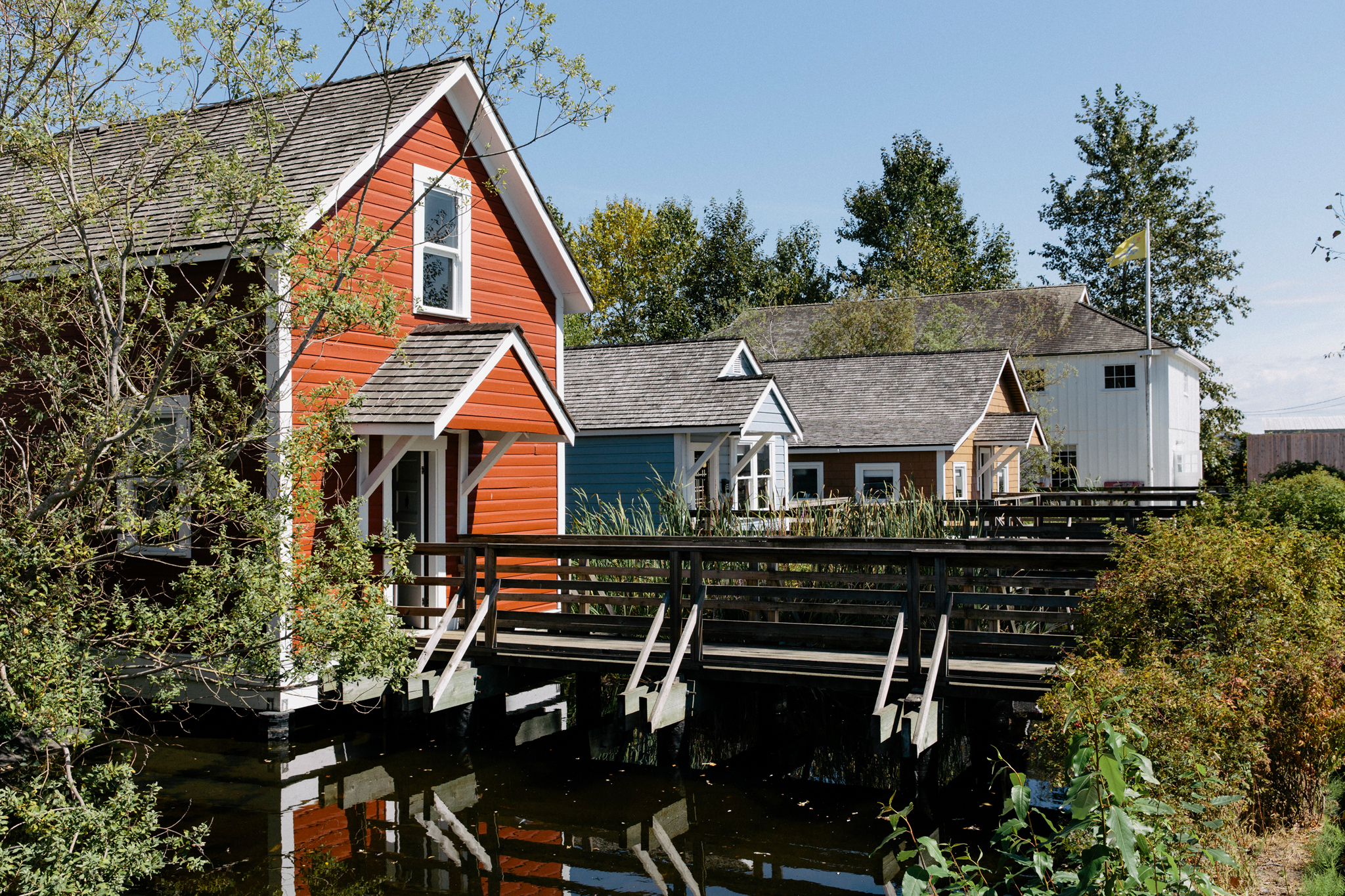
Admission-free heritage attractions don’t come much bigger or more evocative than Steveston’s Britannia Shipyards National Historic Site. This eight-acre shoreline complex is a mini-village of wood-built, shingle-sided buildings that invite you to explore on your own––bringing to life the gritty backstory of a place with many tales to tell.

In the book, I talk a lot about the site’s Murakami House, where an extended Japanese Canadian fishing and boatbuilding family thrived for decades until 1942’s devastating government internment forcibly removed them. But on my return visit, I was also able to fully explore the main shipyard building, which was closed for refurbishment the last time I was here.

This cavernous, L-shaped structure is filled with tools and oily aromas. In fact, it feels as if you might run into a yesteryear worker or two as you walk through its cluttered carpentry, pipe-shop and engine-repair areas. None of the exhibits here are behind glass, which makes it feel less like a museum and more like a time-travelling exploration to a place that appears almost as if it’s still operating.
FREE TRANSIT
The past also feels fully alive at Steveston Tram. Housing a vintage interurban tramcar, the Moncton Street pavilion has always been one of my favourite Metro Vancouver freebie attractions. But my return visit shows I’m not the only fan: a new miniature working model of the tram was recently installed, created by a gaggle of transit-loving Richmond teenagers.

The model is charming. But the chance to climb onboard the real thing is the main reason to visit. Interurban tramcar 1220 used to trundle between Vancouver and Steveston, before its network––five major lines running as far as Chilliwack––was scrapped in the 1950s. While most of the trams were destroyed, this one survived and it’s now a nostalgic reminder of a not-too-distant transit past.

Kids love trying the clunky ticket machines and wearing the scaled-down conductor uniforms here. But I especially enjoy sitting inside the tram’s jewel-box-like interior, imagining yesteryear rail trips. I always check out the colourful, old-fashioned adverts lining its interior, proclaiming the wonders of everything from Margene-brand margarine to Goodwin’s “corn-dodger” shoes.
TRIPLE FREEBIE
While Freecouver also covers London Farm and the Steveston Museum and Post Office, we were keen to show in our book that Richmond has several non-Steveston attractions well worth checking out. One of my favourites is the Richmond Cultural Centre, a short walk from Richmond-Brighouse Canada Line Station.
This busy city centre facility actually houses three main cost-free attractions: Richmond Museum, Richmond Art Gallery and the City of Richmond Archives. On my return visit, the Archives––with its wall-mounted photo timeline of the city and its fascinating Harada Family Exhibit about a local Japanese Canadian family––was closed for the weekend.
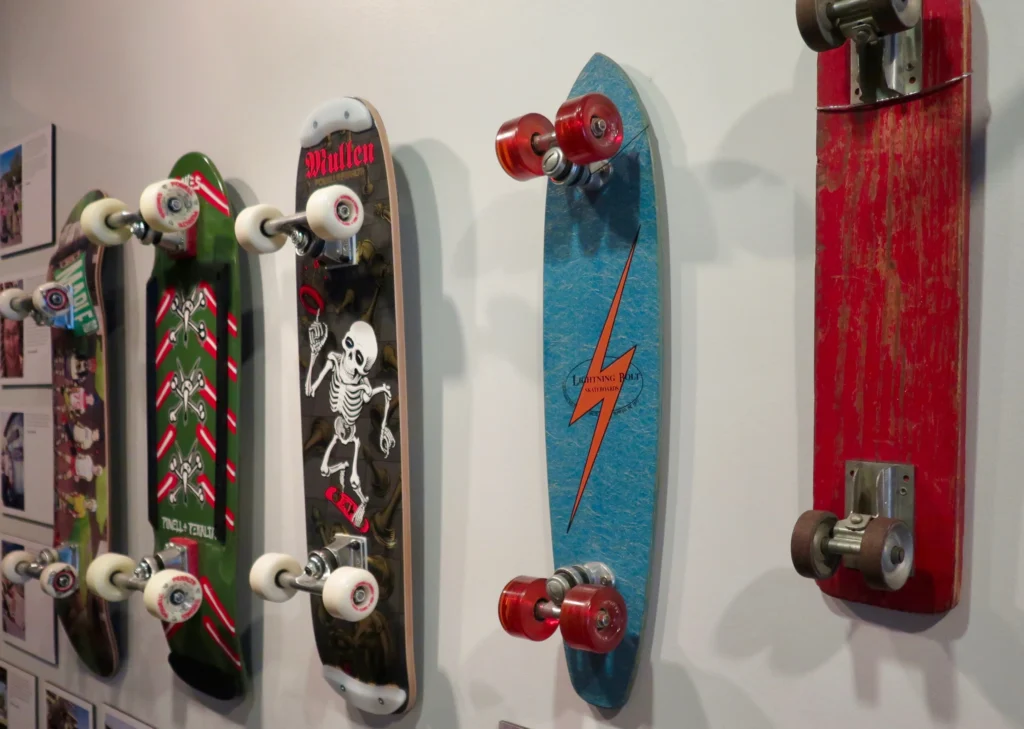
Just a few steps away, though, the small but brilliantly curated Richmond Museum was staging The Maple Road Experience, a fascinating profile of the city’s surprisingly rich skateboarding heritage. With boards, photos, T-shirts and video footage, it highlights the scene’s incredible 1970s heyday––complete with stories about a near-legendary backyard half-pipe!
Next door, the Richmond Art Gallery stages shows throughout the year. On my visit, the exhibition Ongoing/Pacific Crossings displayed works from a cultural exchange with Tokyo’s Art Centre Ongoing. This included white dress shirts covered in paint stick strokes by artist Mineki Murata––alongside a performance video of him energetically applying the paint to a shirt he’s wearing.
FREE FLOWERS
My final visit was all about nature. We’re lucky to have so many great parks in our region, but we only included them in Freecouver when they had something else to offer besides being a park. For example, we included Richmond Nature Park because it also houses the excellent, admission-free Nature House, with its displays and exhibits on our region’s flora and fauna.
And we also included Paulik Neighbourhood Park––my final re-visit destination––because it has a large, hidden gem garden area maintained by the green-thumbed volunteers of the Richmond Gardening Club. Like a rustic botanical garden, the woodchip trails here wind around well-tended beds bursting with ornamental shrubs and flowers.

It was spring when I visited for the book. And although the hyacinths were blooming, I promised myself a summer return. This time, I was treated to Technicolor pockets of hydrangeas, daylilies, black-eyed Susans and sweet-smelling roses, alongside a soundtrack of chickadees and northern flickers. The scents were even headier in the butterfly garden area where battalions of busy bees were hard at work.
Finding a bench seat beneath a Douglas fir, I sat back and drank it all in. Freecouver had been a really fun book to work on, but the pace had been quite intense. Now, though, I could start to enjoy the book like a reader, re-visiting the places we profiled in Richmond and beyond in a far more relaxed way––while also saving money on my days out around the region.
Freecouver: 101 Free Things to do in and Around Vancouver, by John Lee and Rebecca Bollwitt, is published by Tidewater Press. It’s available in all local and online bookstores. Visit the book’s website for additional budget-friendly tips––plus information on a grand giveaway contest with a prize package valued at $700!

Last Updated on August 21, 2026 by Tourism Richmond